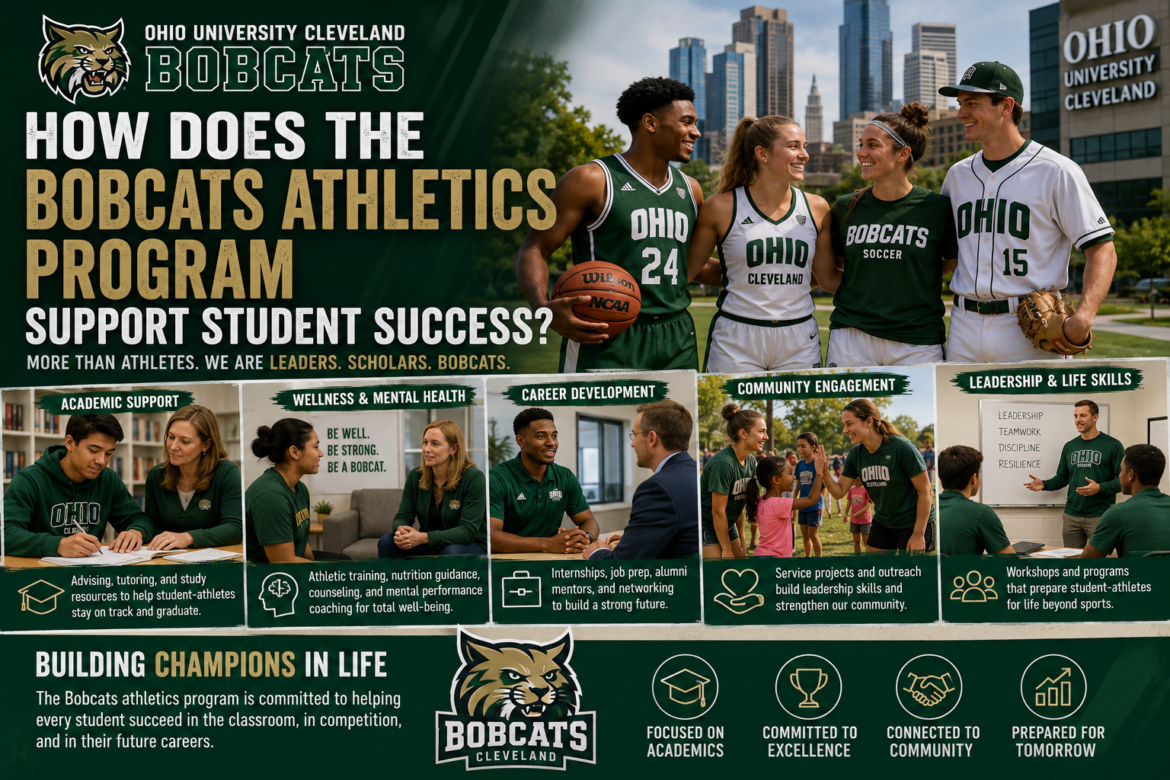
Ohio University Cleveland’s Bobcats athletics program goes beyond wins and losses. It’s structured to help student-athletes thrive academically, personally, and professionally. This post explains how the program supports student success through academic services, wellness and mental health resources, career development, community engagement, and strong campus partnerships. You’ll learn concrete examples of programs, resources, and outcomes that show the holistic approach the Bobcats take to develop well-rounded graduates.
Academic Support and Student-Athlete Success
Dedicated Academic Advising
- Personalized advisors for athletes. Each student-athlete works with advisors who understand NCAA rules, course loads, and the unique scheduling needs of athletes. Advisors help create degree plans that align with practice and competition schedules to keep progress steady.
- Monitoring and intervention. Advisors track grades and credit completion, intervening early when a student shows academic risk. This helps prevent small problems from becoming barriers to graduation.
Tutoring and Study Spaces
- Sport-specific tutoring programs. Tutors often have experience in the same majors or even as former athletes, making support more relevant and relatable.
- Reserved study areas. Quiet study rooms and group study sessions are available at times that fit training schedules, encouraging consistent study habits.
- Academic workshops. Time-management, note-taking, and test-prep workshops are offered regularly to sharpen study skills for student-athletes who face heavy time constraints.
Flexible Scheduling and Course Options
- Online and hybrid classes. For student-athletes who travel, online and hybrid courses let them keep up with coursework during road trips and competition seasons.
- Proactive registration. Advisors work with academic departments to secure seats in required classes, reducing the risk of delayed graduation due to schedule conflicts.
Performance Analytics and Feedback
- Academic progress reports. Regular check-ins and progress reports keep athletes informed and accountable.
- Goal-setting sessions. Students set measurable academic goals with advisors and coaches, creating clear expectations and celebrating milestones.
Health, Wellness, and Mental Health Resources
Athletic Training and Physical Health
- On-site athletic trainers. Certified athletic trainers provide immediate injury assessment, rehabilitation programs, and preventative care to minimize downtime.
- Strength and conditioning programs. Structured training plans aim to enhance performance while reducing injury risk, helping athletes stay healthy across seasons.
- Nutrition support. Nutritionists or dietitians offer meal plans and practical advice to fuel training and recovery without sacrificing academics or daily life.
Mental Health Services
- Accessible counseling. Licensed counselors provide one-on-one therapy, group sessions, and crisis support tailored to athletes’ busy and high-pressure lives.
- Performance psychology. Sport psychologists and mental skills coaches teach stress management, focus techniques, and confidence-building strategies that transfer to academics and life.
- Peer support networks. Team-based peer programs encourage athletes to share challenges, normalize stress, and support each other’s mental well-being.
Work–Life Balance Education
- Time-management coaching. Programs teach athletes how to schedule effectively, prioritize tasks, and maintain social life while meeting athletic and academic demands.
- Sleep education. Workshops explain the importance of sleep for recovery and cognition, offering practical tips to improve sleep quality despite travel and practice.
Career Development and Life After Sports
Internships and Career Services
- Targeted career advising. Career counselors work with athletes to translate athletic experience into marketable workplace skills—leadership, teamwork, discipline, and time management.
- Internship partnerships. The program collaborates with local businesses and alumni to offer internships that accommodate athletic schedules and build relevant experience.
- Resume and interview prep. Mock interviews and résumé workshops emphasize how to present athletic achievements in industry-friendly language.
Networking and Alumni Mentorship
- Alumni mentor programs. Former Bobcats who’ve succeeded in business, education, healthcare, and other fields mentor current athletes, sharing career paths and opening doors.
- Networking events. The school organizes meet-and-greets and panel events where student-athletes connect with professionals in their fields of interest.
Leadership and Transferable Skills
- Captains’ leadership training. Team leaders receive coaching on communication, conflict resolution, and mentorship—skills valuable in any career.
- Community service projects. Volunteer work builds project management and interpersonal skills, while also boosting résumés and employer appeal.
Holistic Personal Development
Life Skills Workshops
- Financial literacy. Sessions on budgeting, taxes, student loans, and credit help athletes manage finances during and after college.
- Healthy relationships and communication. Workshops cover conflict resolution, healthy boundaries, and professional communication skills.
- Time-off strategies. Guidance on downtime and hobbies helps prevent burnout and enables long-term motivation.
Civic and Community Engagement
- Community outreach. The Bobcats encourage athletes to lead clinics, visits, and fundraising events, strengthening local ties and empathy.
- Service learning. Some programs blend community service with academic credit, tying civic involvement to academic growth.
Inclusive Culture and Diversity
- Support for diverse backgrounds. The athletics program promotes inclusion with resources for first-generation students, international athletes, and underrepresented groups.
- Safe reporting and support structures. Clear procedures ensure athletes facing discrimination or harassment have confidential reporting and support.
Facilities and Resources That Support Success
Modern Training and Academic Facilities
- Dedicated practice facilities. Safe, well-equipped spaces reduce injury risk and create consistent training environments.
- Academic resource centers near athletic facilities. Proximity makes it easier for athletes to transition from practice to study without losing time.
- Tech-enabled learning. Access to video review, online course tools, and performance analytics supports both athletic and academic improvement.
Travel and Logistics Support
- Structured travel plans. Teams travel with academic materials, Wi-Fi access, and quiet spaces arranged so athletes can study on the road.
- Recovery resources on travel. Portable recovery tools and planned rest windows maintain physical and mental health during intense travel schedules.
Coaching Philosophy and Athlete-Centered Leadership
Coach-Academic Collaboration
- Coaches prioritize academic eligibility and graduation. They coordinate with academic staff to ensure student-athletes meet requirements and get needed support.
- Shared accountability. Coaches hold athletes to team standards that include academic performance, not just athletic metrics.
Holistic coaching approaches
- Emphasis on character and resilience. Coaches teach life skills—handling setbacks, time management, and leadership—that help in future careers.
- Individual development plans. Coaches and staff create tailored plans that set athletic goals while balancing academics and personal growth.
Measuring Success: Outcomes and Impact
Graduation and Retention Rates
- Improved graduation rates. Athletic programs that emphasize academic support typically report higher retention and graduation among athletes.
- Eligibility and completion tracking. Systematic monitoring ensures athletes stay on track for degree completion.
Career Placement and Graduate Study
- Post-grad employment and grad school. Former athletes often find success in graduate programs and job placement due to their discipline and leadership experience.
- Long-term alumni outcomes. Programs track alumni careers to refine career services and create success-driven programming.
Student Stories and Examples
- Real-life transitions. Many Bobcats have used athletics as a launchpad—balancing sports and studies while securing internships, scholarships, and jobs.
- Role models. Alumni who return as mentors or coaches exemplify how the program supports sustained personal and professional growth.
How the Program Supports Non-Athlete Students and the Broader Campus
Campus Integration and Reputation
- Athletics as academic ambassadors. Successful teams increase campus visibility, drawing attention that benefits academic programs and recruitment.
- Shared resources. Facilities and wellness programs often serve both athletes and the wider student body, improving campus-wide support.
Community Partnerships
- Local collaboration. Partnering with Cleveland businesses and organizations creates internships, volunteering, and research opportunities for all students.
- Public events. Games and community outreach foster school spirit and create networking opportunities that benefit non-athlete students.
Practical Tips for Prospective Student-Athletes
How to Evaluate Support When Applying
- Ask about academic advisors and tutoring services. Request specifics about how many advisors exist and how they work with athletes.
- Inquire about travel study arrangements. Clarify how the program helps athletes keep up with coursework during away games.
- Request alumni outcomes. Ask for statistics on graduation rates and post-college placements for athletes in your sport.
Maximizing the Support Available
- Use advisors proactively. Meet regularly to adjust schedules and plan for internships.
- Prioritize mental health. Take advantage of counseling and sports psychology services early.
- Build relationships with alumni. Connect through mentoring programs and networking events to expand career options.
Exactly The Areas Where The Bobcats Invest
Ohio University Cleveland’s Bobcats athletics program supports student success through a comprehensive, athlete-centered approach: targeted academic services, strong health and mental wellness resources, career development opportunities, and intentionally designed facilities and coaching philosophies. These elements work together to help student-athletes graduate, launch careers, and become engaged community members. For prospective athletes and families, the key is to look for programs that balance competitive athletics with measurable academic and personal support.